

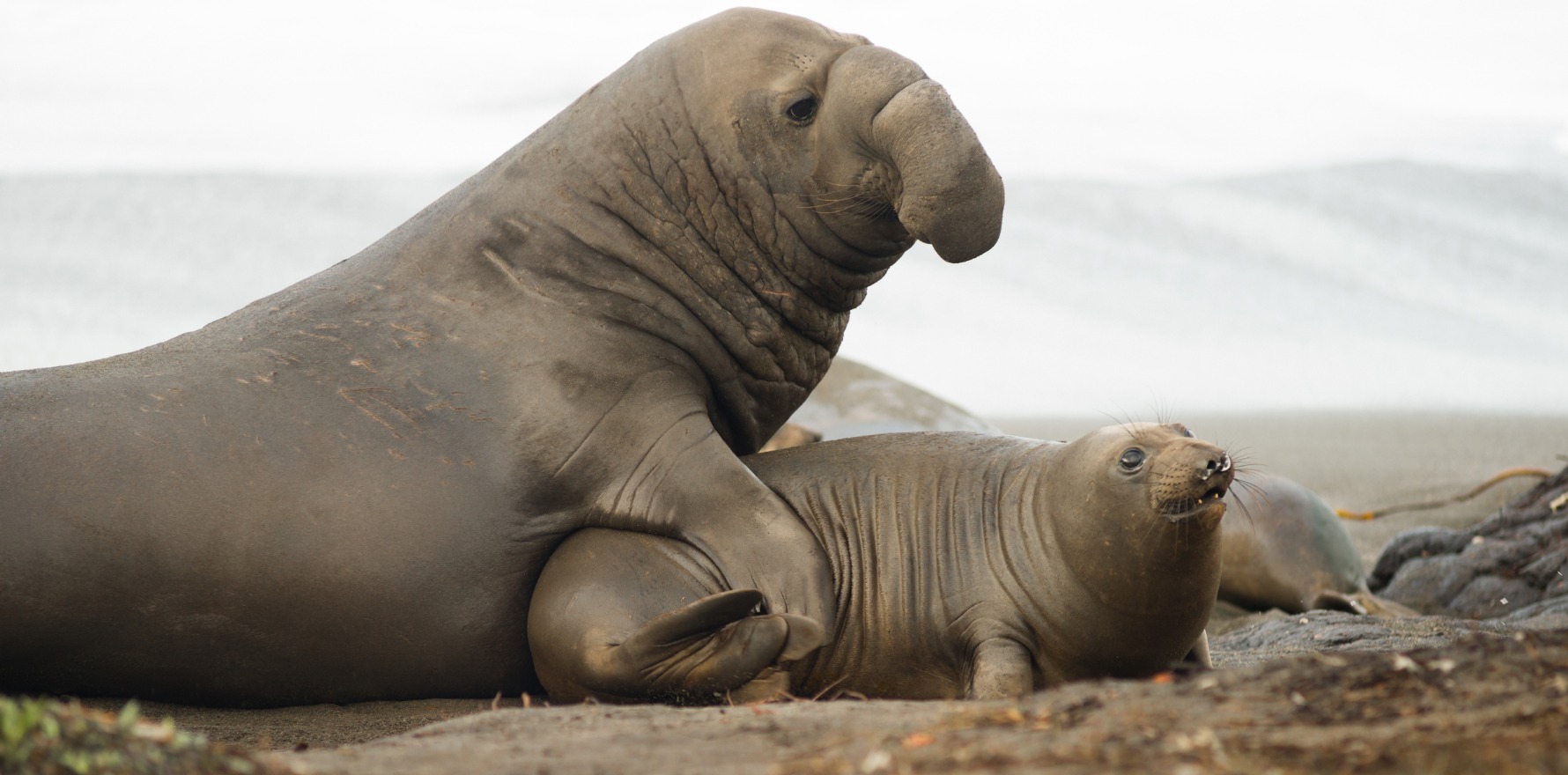
Experts are advising Australians should ‘remain alert but not alarmed’.
Last week Australian authorities detected the highly contagious H5N1 avian influenza (clade 2.3.4.4b) in a group of dead elephant seals on Heard Island.
The island, a sub-Antarctic remote Australian territory located approximately 4000km south-west of Perth and 1700km north of Antarctica in the Southern Ocean, is the first Australian territory to have confirmed cases of a H5 influenza strain.
“This particular subtype of H5N1… [has] travelled from China right across Europe, down to Antarctica, and is now present on Heard Island,” said Associate Professor Wayne Boardman, a wildlife veterinarian from the School of Animal and Veterinary Science at the University of Adelaide.
“It is also potentially a zoonotic disease, so people should be careful in how they react to it, and they should report any cases they come across.
“Whilst we can try to ameliorate the extent of an outbreak through on-ground biosecurity, it will be very difficult to prevent it from reaching mainland Australia, and it is expected that the virus will arrive at some stage.
“How it will get here, we’re not entirely sure. When it will get here, we have no idea. We can’t stop birds flying, and so we can only prepare for what might happen if the disease does arrive.”
Professor Adrian Esterman, chair of biostatistics at the University of South Australia, said that while Australia had previously avoided H5N1 cases occurring in its various jurisdictions, the remote location of the seal-related cases was still a cause for concern.
“Until now, Australia has been the only continent free from H5N1, mainly because Australia is not on the typical migratory route of wild birds. The confirmation of H5N1 bird flu on Heard Island, a remote Australian Territory, marks an important, but not unexpected development in the virus’s global spread,” he said in a statement.
“Heard Island has no permanent human population, and the current findings are confined to elephant seals, with no evidence yet of impacts on penguins or seabirds. However, it is a reminder that we cannot afford complacency. Avian influenza has devastated wildlife across multiple continents, and once established in a new region, it cannot be eradicated.
“While the public should not be alarmed, we should all understand that this is a global, evolving threat. Early detection and sustained preparedness are our best tools to protect Australia’s wildlife, agricultural industries and communities.”
Associate Professor Jacqueline Stephens, an epidemiologist from Flinders University, also expressed concern about how quickly things could take a negative turn.
“There is a growing consensus that this ‘bird flu’ will reach mainland Australia at some point, and it will likely have a devastating impact on our wildlife,” she told media.
Related

“Since 2024, in the USA there have been 71 human cases of confirmed H5N1 ‘bird flu’, mostly amongst poultry and dairy farmers. Epidemiologists are concerned because influenza is a highly adaptable virus and, since there have already been sporadic human cases, it is possible H5N1 could adapt to be highly contagious in humans, although thankfully this has not yet eventuated.”
But Dr Farhid Hemmatzadeh, an Associate Professor in Virology at the School of Animal and Veterinary Sciences at the University of Adelaide, was less worried about the recent outbreak.
“Considering the long distance between the Australian mainland and Australia’s sub-Antarctic islands, the recent H5N1 outbreak does not increase risks to Australia,” he said, echoing comments made by Minister for Agriculture Julie Collins.
“While this detection of H5 bird flu on Heard Island does not substantially increase risks to Australia, it does reinforce the ongoing need for Australia to remain focused on preparing for a potential outbreak,” Ms Collins said.
Honorary Professor Robyn Alders AO said the news showed the nation’s surveillance systems are working.
“Preparedness activities are underway, and the task is substantial, as government agencies must coordinate with many partners, including public health officials, poultry industry representatives, veterinarians, wildlife rangers and carers, bird watchers and the general public,” said the co-lead of the Socioeconomic Working Group of the FAO-World Organisation for Animal Health animal influenza network.
H5N1 influenza is most often found in birds but has been known to infect other mammals – including humans – either directly (via infected poultry) or indirectly (via contaminated environments). The strain causes severe respiratory illness with a high fatality rate in humans.
Earlier this week reports emerged that H5N5 avian influenza had been detected in humans for the first time.
