

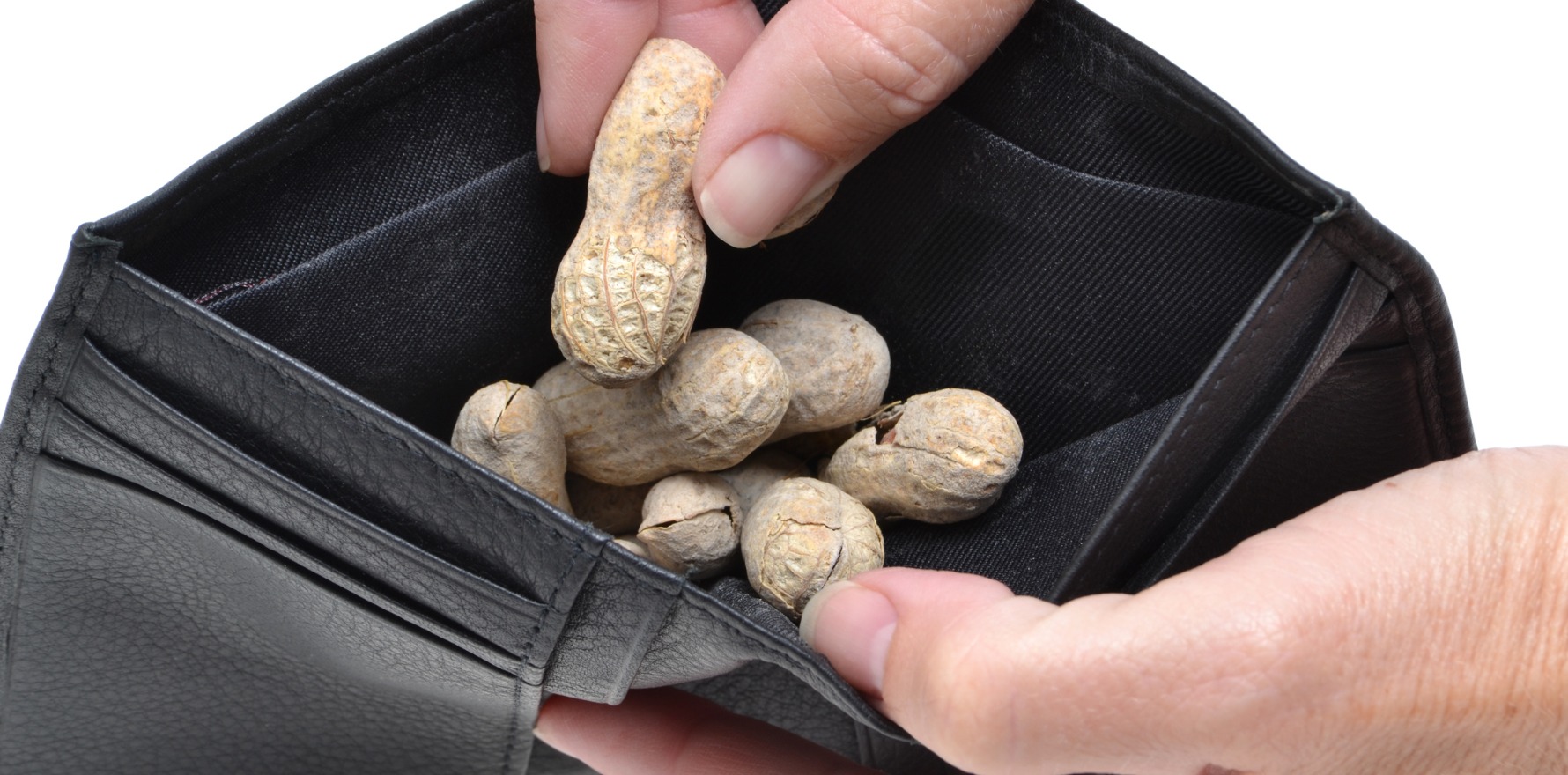
A new economic evaluation of Australian clinical trial data suggests peanut oral immunotherapy represents ‘good value’ compared to no treatment with respect to admission.
If you pay peanuts, you get monkeys. But if you pay for peanut immunotherapy, you get a cost-effective way of achieving remission.
The use of peanut oral immunotherapy (with or without a probiotic adjuvant) to treat peanut allergies in children has become increasingly common in recent years, with many trials proving its clinical effectiveness.
However, less research has focused on the cost effectiveness of these approaches and whether their benefits outweigh the associated financial costs and adverse events.
Now, a new cost-effectiveness analysis of data collected in the PPOIT-003 phase 2b trial aims to address this gap in our knowledge. The findings, published in JAMA Network Open, suggest that the money is worth it in the long run.
“Food allergy requires major lifestyle changes, and those living with the condition often experience social limitations,” wrote Associate Professor Jennifer Protudjer, a researcher from the University of Manitoba with expertise on the social, psychological and financial burden of food allergy, in her commentary on the new research.
“While avoidance may presently be the current standard of care for many patients with food allergy, Huang et al. provide robust data to support three practical options through a cost lens for patients, families, and their health care practitioners.
“Avoidance in combination with more frequent visits may improve quality of life, but not alter disease trajectory. OIT, whether mono-peanut or in combination with a probiotic, are both cost-effective options but [are accompanied] with more adverse events.”
Data for 201 children aged one to 10 years with a peanut allergy confirmed by a double-blind placebo-controlled food challenge were considered (83 received OIT, 79 received PPOIT and 39 received no treatment). Remission rates after two years of treatment were higher for the OIT (51%) and PPOIT (46%) groups compared to the placebo group (5%).
After considering the costs of the active treatment (which included the wages of doctors and nurses in administering hospital-based treatments, assessing for allergic responses at multiple time points and the cost of the OIT products themselves) and adverse events that were deemed to be treatment-related or likely treatment-related (e.g., ambulance calls, ED visits and any hospitalisations), the extrapolated costs for each patient over a 10-year period were $3582 for OIT and $3956 for PPOIT, compared to $2381 for the placebo group and $249 for a hypothetical no treatment group.
The largest proportion of these treatment costs were attributed to active treatment ($3179 in OIT, $3579 in PPOIT), with the remaining amounts attributed to adverse events.
Adverse events were more common in the OIT and PPOIT groups, but quality of life scores were higher in the active treatment groups compared to the placebo group at the two-year posttreatment follow-up and a greater number of quality-adjusted life years were gained.
“Estimated medical care costs were lower in the placebo group, primarily because few participants underwent remission testing,” the researchers noted.
“[But the cost-effectiveness results] largely reflects the clear clinical benefits of active treatments on remission and the minimal variability in treatment costs, which dominate total costs.”
The researchers also noted that PPOIT was slightly more expensive than OIT, with the difference attributed to the additional cost of the probiotic component and a slightly lower readmission rate compared to OIT alone.
“Overall, the cost-effectiveness conclusion depends on what outcome is valued,” they wrote.
“If remission is valued, both active treatments are good values compared with the hypothetical no treatment with OIT being slightly better; however, if QALYs are valued, PPOIT presents better value.
“The improved quality of life with PPOIT may be attributed to fewer gastrointestinal events.”
Related



An important limitation to the research was that the long-term outcomes beyond the designated follow-up period were extrapolated.
The researchers felt this approach was justified as they believed the “differences between groups were unlikely to converge immediately after follow-up ended”, they did note that “the extrapolation assumptions were pessimistic and may underestimate the true treatment outcomes”.
“Taken collectively, the findings by Huang et al. support that shared decision-making is a critical step in determining which approach – OIT, PPOIT or total avoidance – is the most appropriate option for any given patient and their family,” Professor Protudjer concluded.
“Such discussions should include emphasis on the potential ability to introduce and retain the allergen into a family’s regular diet if or once sustained unresponsiveness or tolerance is reached and the ability to invest time and resources into each approach.”
