

The ASCIA guidelines reinforce adrenaline as the first-line treatment for anaphylaxis and introduce new pathways for refractory reactions and the growing range of adrenaline devices.
Health professionals have been urged to give adrenaline without delay when anaphylaxis is suspected, under substantially updated Australian guidance that also tackles the potentially dangerous overlap between anaphylaxis and acute asthma.
The Australasian Society of Clinical Immunology and Allergy has this month released its updated Guidelines for Acute Management of Anaphylaxis, with new flowcharts covering initial and refractory anaphylaxis and information on all adrenaline devices approved for use in Australia and New Zealand, including nasal sprays.
The guidelines define anaphylaxis as a potentially life-threatening systemic allergic reaction that is usually rapid in onset. Importantly, acute hypotension or respiratory impairment can constitute anaphylaxis even in the absence of typical skin features such as urticaria or angioedema.
ASCIA says any one of a series of severe symptoms, including difficult or noisy breathing, tongue or throat swelling, wheeze or persistent cough, difficulty talking, hoarse voice, persistent dizziness or collapse, should raise concern for anaphylaxis.
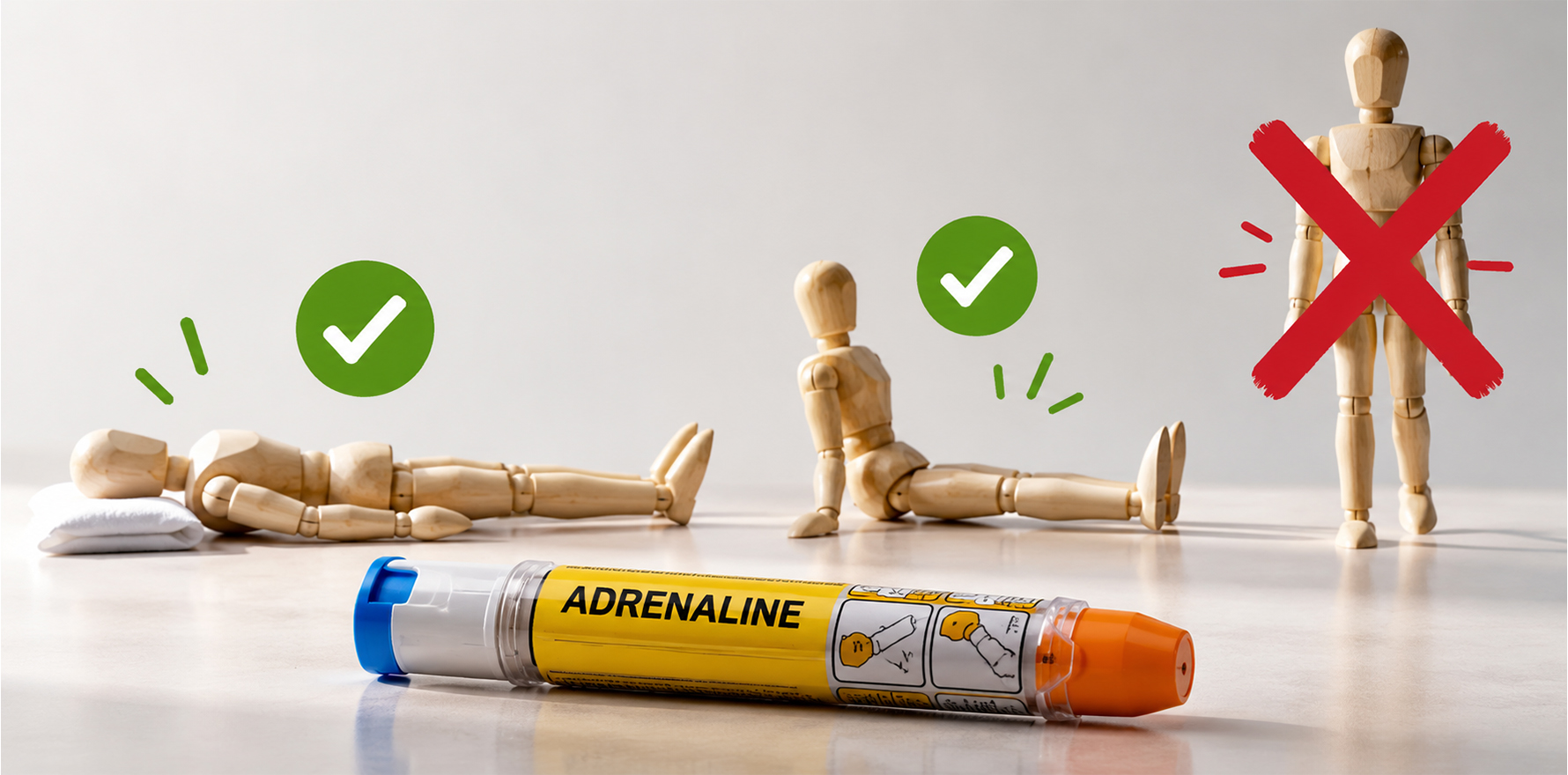
The update places particular emphasis on positioning. Patients should not stand or walk during anaphylaxis, even if they appear to have recovered, because doing so can impair venous return and precipitate severe hypotension.
Patients should generally lie flat, while those predominantly affected by respiratory symptoms may sit with their legs outstretched.
Adrenaline remains the first-line treatment and should be administered without delay.
Related



The initial management pathway advises repeat adrenaline after five minutes if there is no or inadequate response, alongside supportive care including monitoring, oxygen and, when indicated, IV or intraosseous access and fluid resuscitation.
Refractory anaphylaxis is defined in the new flowchart as persistent respiratory or cardiovascular symptoms despite two doses of adrenaline. In these cases, ASCIA recommends early expert help, IV or IO access, an adrenaline infusion and optimisation of fluid resuscitation, with critical care support described as essential.
The guidance is particularly emphatic for patients with asthma, where bronchospasm from anaphylaxis may resemble life-threatening asthma.
Unexpected sudden wheeze or asthma symptoms should be considered and managed as anaphylaxis, and adrenaline should be given according to the anaphylaxis guideline before asthma reliever medication in patients with known asthma and allergy who develop sudden breathing difficulty after possible allergen exposure.
Bronchodilators can be added for persistent wheeze but must not replace adrenaline because they do not treat upper airway obstruction, hypotension or shock.
ASCIA also says corticosteroids should not be used instead of adrenaline, noting that their benefit in anaphylaxis is unproven, while antihistamines have no role in treating or preventing its respiratory or cardiovascular manifestations.
The updated guidance also reflects the expanding range of adrenaline products. As of 1 July 2026, TGA-registered options listed in the document include EpiPen, Anapen and Jext injectors as well as the 1mg and 2mg neffy intranasal adrenaline devices.
Following treatment, patients should be observed for at least four hours after their last adrenaline dose because refractory, relapsing or biphasic reactions can occur.
Overnight observation is strongly recommended in higher-risk circumstances, including severe or refractory reactions, severe asthma and previous biphasic or recurrent anaphylaxis.
Before discharge, patients should receive an adrenaline device where possible, be trained to use it and receive an ASCIA Action Plan for Anaphylaxis.
ASCIA also recommends that all patients presenting with anaphylaxis be referred by their GP to a clinical immunology/allergy specialist to identify the cause, address prevention and comorbidities and prepare for future reactions.
The guidelines, first developed in 2011, were significantly revised this year following multidisciplinary review involving allergy specialists, emergency physicians, GPs, paediatricians, anaesthetists, pharmacists, nurses and dietitians.
ASCIA says they will remain “living” guidelines and will be updated as required.
See the updated guidelines here.
